Quick answer
Electric cars lose roughly 20-35% of their range in Lithuanian winter conditions (-10 to -20C), mainly due to cabin heating. A Tesla Model 3 with 491 km WLTP range delivers approximately 320-380 km in winter, while preconditioning the battery while plugged in recovers part of the lost range. EVs are fully viable for Lithuanian winters with basic precautions.
"Wait until winter comes, then you'll see" – every electric car owner in Lithuania has heard this phrase. Skeptics claimed from the start that electric cars aren't suitable for our climate. But are they right? In this article, we examine in detail how electric cars actually perform in Lithuanian winter conditions, what real driving ranges are, and what you can do to ensure the cold doesn't become a problem.
Physics: Why Cold Affects Electric Cars
 Illustration: Physics: Why Cold Affects Electric Cars
Before discussing practical tips, it's important to understand what happens to an electric car battery in winter. This is not a malfunction or defect – it's natural physics.
How Lithium-Ion Batteries Work
Electric cars use lithium-ion batteries that generate electricity by moving lithium ions between electrodes through an electrolyte. This process works most efficiently at temperatures around 15-25°C.
What happens in cold:
At low temperatures, the electrolyte viscosity increases – ions move more slowly. This means:
- Reduced ability to deliver energy (shorter driving range)
- Slower charging (especially at fast-charging stations)
- Increased internal resistance
Important to understand: the battery doesn't "break" in the cold – it simply works less efficiently temporarily. When it warms up, the capacity returns to normal.
The Cabin Heating Dilemma
An internal combustion engine produces heat "for free" – it's only about 30% efficient, with the remaining 70% turning into heat that's used to warm the cabin.
An electric motor is 90-95% efficient – almost all energy converts to motion, not heat. This is great for efficiency, but problematic in winter because the cabin needs to be heated directly from the battery.
Cabin heating in winter can consume up to 30% of battery energy. This is the main reason why the driving range decreases in winter.
Real Numbers: How Much Does Range Decrease in Winter?
Theory is one thing, but what actually happens on Lithuanian roads?
Test Results and Driver Experience
Based on tests and the experience of Lithuanian electric car drivers:
At 0°C: driving range decreases by 15-25% At -10°C: decrease of 25-35% At -20°C and below: decrease of 35-50%
Concrete example – Peugeot e208:
| Conditions | WLTP (ideal) | Real (city) | Real (highway) |
|---|---|---|---|
| Summer +20°C | 362 km | 320 km | 280 km |
| Winter 0°C | 362 km | 260 km | 220 km |
| Winter -10°C | 362 km | 220 km | 180 km |
| Winter -20°C | 362 km | 180 km | 164 km |
As you can see, in severe cold and driving on the highway, the range can be cut almost in half compared to the manufacturer's claims.
Why Is Highway Performance Worse?
On the highway, an electric car uses more energy because of:
- Greater aerodynamic resistance (speed²!)
- Less frequent regenerative braking
- More intensive battery cooling/heating
The city situation is better – lots of regenerative braking, lower speeds, frequent stops allow the battery to "breathe."
Most Popular Electric Cars in Lithuania: How Do They Perform in Winter?
Tesla Model 3 / Model Y
Advantages:
- Heat pump (in newer generations) – more efficient cabin heating
- Automatic battery pre-conditioning (when selecting a charging station in navigation)
- Good thermal management system
Disadvantages:
- Without heat pump (earlier models) range drops more significantly
- Door handles can freeze shut
Real driving range in winter (-10°C):
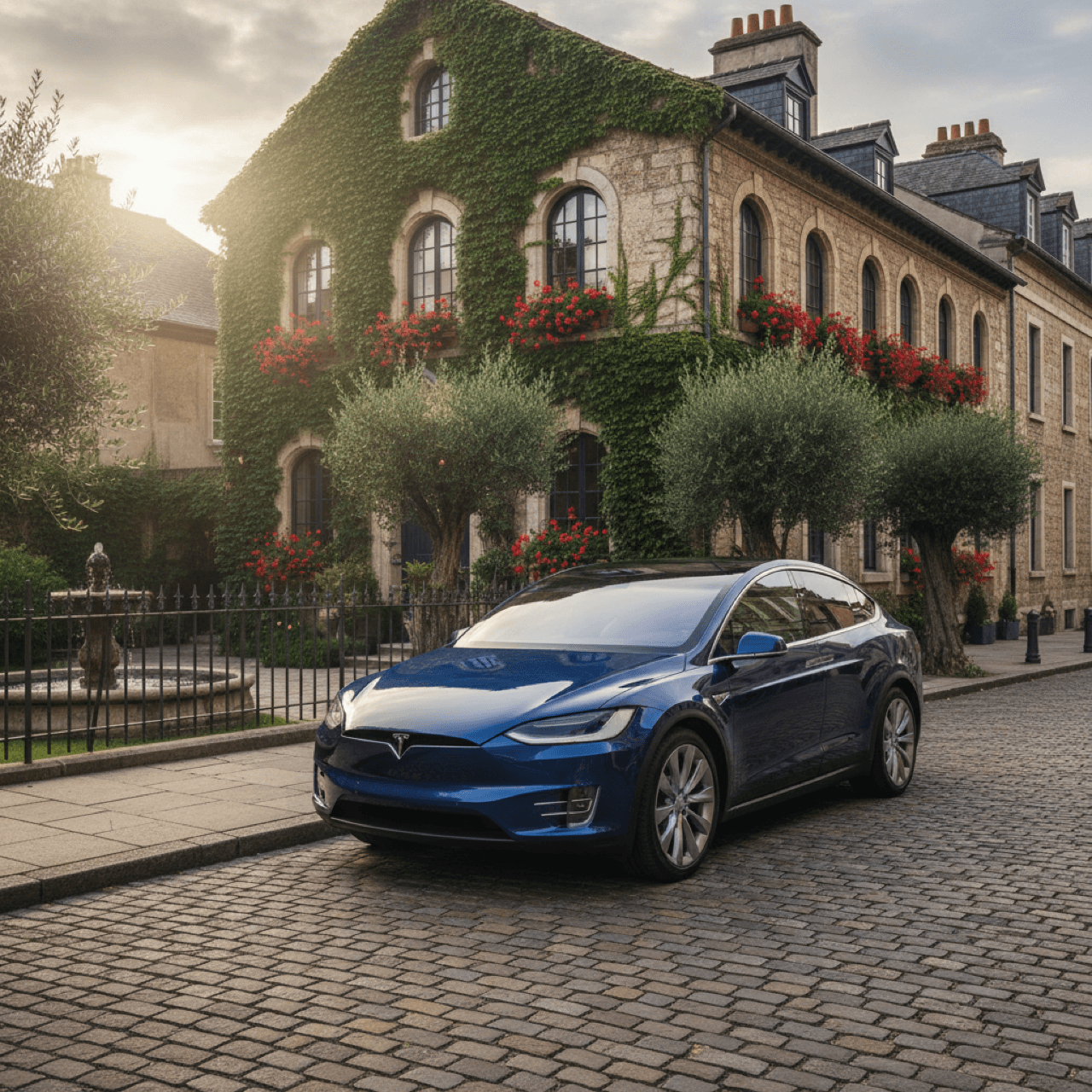
- Model 3 Long Range: ~350 km (vs ~560 km)
- Model Y Long Range: ~320 km (vs ~500 km)
Volkswagen ID.4
Advantages:
- Heat pump included as standard
- Good reputation for heating efficiency
Disadvantages:
- Software issues (improving with updates)
Real driving range in winter (-10°C):
- ID.4 Pro: ~280 km (vs ~500 km)
Nissan Leaf
Advantages:
- Reliable, well-known model
- Large service network
Disadvantages:
- In older generations, battery is air-cooled (less efficient)
- Often uses resistive heating (high energy consumption)
Real driving range in winter (-10°C):
- Leaf 40 kWh: ~150-180 km (vs ~270 km)
Hyundai Ioniq 5 / Kia EV6
Advantages:
- Heat pump
- Fast 800V charging
- Good battery heating
Disadvantages:
- Some drivers report slow battery pre-heating before charging
Real driving range in winter (-10°C):
- Ioniq 5 Long Range: ~320 km (vs ~480 km)
Get a Personal Offer
We'll call you back within 24 hours.
Charging in Winter: What You Need to Know
Cold affects not only range but also the charging process. Here's what you need to understand.
Fast Charging Speed in Winter
An electric car battery charges best at around 20-25°C. When the battery is cold, it accepts less power to protect itself from damage.
In practice, this means:
If your car charges 10-80% at a fast-charging station in summer in 30 minutes, the same process can take 45-60 minutes or even longer in winter with a cold battery.
Battery Pre-Conditioning
Many modern electric cars have a battery pre-heating function. It works like this:
- You select a charging station as your destination in navigation
- The car automatically starts heating the battery during the journey
- When you arrive, the battery is already at optimal temperature
- Charging happens quickly, just like in summer
Important: This function uses additional energy while driving, but it pays off with faster charging.
Which cars have this function:
- Tesla – automatic when you select a Supercharger in navigation
- Hyundai/Kia – manual or via navigation
- Volkswagen ID family – automatic via navigation
- Porsche/Audi – automatic
Older or budget electric cars may not have this feature – in that case, it's worth charging right after driving while the battery is still warm.
Home Charging in Winter
If you charge at home from a 220V outlet or wallbox:
Cold has less impact: home charging is slower (2-7 kW), so the battery has time to warm naturally during the process.
Tip: If possible, charge in a garage or at least under a roof. It's important not just for warmth, but also to protect the charging port from snow and ice.
Overnight: A standard outlet can add ~80-100 km of range overnight (depending on the car). This is often enough for daily use.
Practical Tips: How to Maximize Range in Winter
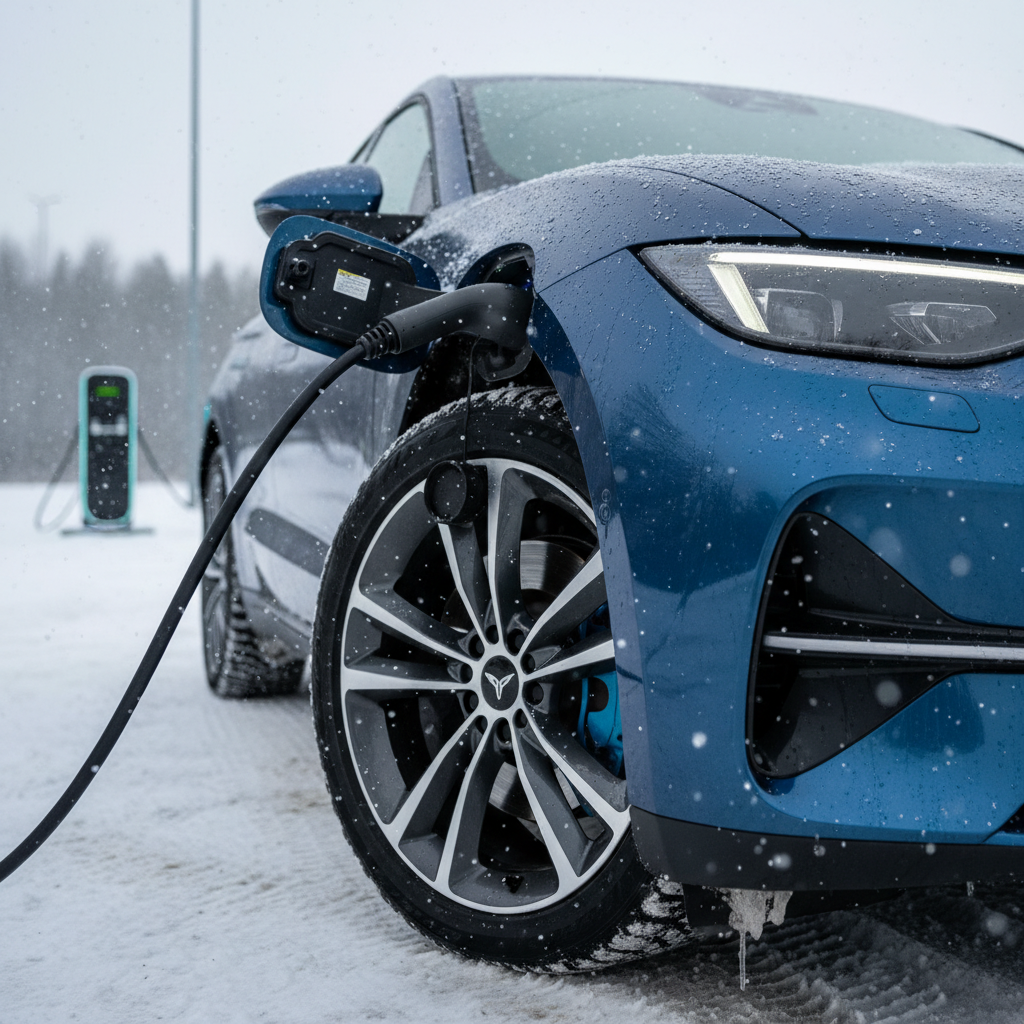 Illustration: Practical Tips: How to Maximize Range in Winter
1. Pre-Heat the Cabin in Advance
Best – heat the cabin while the car is plugged in. Many electric cars allow you to do this via an app.
Benefit: Grid energy is used for heating, not battery. When you get in, the cabin is already warm, and maintaining that temperature while driving requires less power.
2. Use Seat and Steering Wheel Heating
Seat heating uses only ~50-75W, while cabin heating uses 2000-5000W. The difference is huge.
Strategic approach:
- Set cabin temperature to 18-19°C (instead of 22°C)
- Turn on seat heating to MAX
- Turn on steering wheel heating
- Use foot vents (warm air rises)
You'll feel warm, but energy consumption will be much lower.
3. Plan Your Route
Before a longer journey:
- Check charging station locations
- Plan charging stops every 150-200 km (instead of 250-300 km in summer)
- Select fast-charging stations as intermediate destinations in navigation (automatic battery pre-heating)
4. Keep Battery at 20-80% Level
In winter it's especially important:
- Don't leave the car with <20% battery – a cold battery with low charge can damage cells
- Don't charge to 100% before parking – a fully charged battery ages faster
Optimal for daily use: 30-80%.
5. Park in a Warmer Location
A garage is ideal. Even an unheated garage is 5-10°C warmer than outside.
If you don't have a garage:
- Underground parking
- Under a roof (protection from wind)
- Next to a building wall (slightly warmer)
6. Use ECO Mode
ECO mode limits power but saves energy. In winter, when every kWh matters, this can help you drive an extra 10-20 km.
"Range Anxiety" – Fear of Running Out of Charge
Many electric car owners experience anxiety about their battery in winter – will it really be enough? What can you do?
Reality Check
Average trip in Lithuania: most people drive 30-50 km per day (work, shops, schools).
Electric car range in winter: even in the worst case (-20°C, older Leaf) – ~150 km.
This means that even in poor conditions, an electric car can go 3-5 days without charging for daily commutes.
If Your Battery is Almost Empty While Driving
Your electric car will warn you in advance. If you see that energy won't be enough:
- Turn off heating – leave only essential window defrosting
- Reduce speed – 80 km/h instead of 110 km/h can "save" 20 km
- Turn on ECO mode
- Find the nearest charging station – or even a regular outlet
In a critical situation, you can charge from a regular 220V outlet – 30 minutes might be enough to drive 5-10 km to the nearest station.
Roadside Assistance
If your electric car "dies" on the road:
- Roadside assistance can bring a mobile charger
- Or tow it to the nearest charging station
These services are often included in comprehensive insurance or "Roadside assistance" packages.
Is an Electric Car Suitable for Lithuanian Winter?
Answer: YES, but with conditions.
For Whom Electric Cars Work Great
- People with the ability to charge at home (garage, private charging station)
- For daily city and suburban commutes (up to 100 km/day)
- People who rarely take long trips (>300 km)
- Those who can plan and aren't in a hurry
For Whom It May Be More Challenging
- Those living in apartment buildings without charging capability
- People who travel between cities daily
- Those who need "here and now" mobility without planning
Future Trends
The situation improves every year:
- Charging network is expanding (Lithuania already has >1000 public stations)
- Battery technology is improving (less cold impact)
- Heat pumps are becoming standard
- Manufacturer-claimed ranges are approaching real ones
Summary
An electric car in winter in Lithuania is not a problem – it's a challenge you can easily overcome with proper knowledge and habits.
Main takeaways:
- Range decreases 20-40% in winter, which is normal
- Heat the cabin from the grid before driving
- Use seat heating instead of cabin heating
- Plan longer trips carefully
- Keep battery at 20-80% level
Thousands of Lithuanians drive electric cars year-round – and they don't freeze on the road. If they can, so can you.
Considering an electric car but don't know where to start? WHEELSTREET helps find reliable used electric cars with verified battery condition. Every electric car is tested before sale, including battery health check (SOH). Contact us for consultation – we'll help you choose an electric car that will suit your needs in winter and summer.
Also useful:
- ⚡ Electric Cars WHEELSTREET – verified EV options with warranty
- 🏆 Used Tesla Model 3 in Lithuania – most popular EV
- 🔋 Hybrids vs Electric Cars in Lithuania – which to choose for winter?
- 💰 Leasing Calculator – calculate electric car payment
- 📚 Electric Car — Glossary
- 📚 EV Battery — Glossary
Buy from Lithuania
Looking to buy a quality used car from Lithuania? WHEELSTREET offers professional car sourcing with full inspection, history check and cross-border delivery across Europe. Browse verified inventory at WHEELSTREET Used Cars or request a custom car search at Car Sourcing Service.
WHEELSTREET ☎ +370 660 09716 | wheelstreet.lt