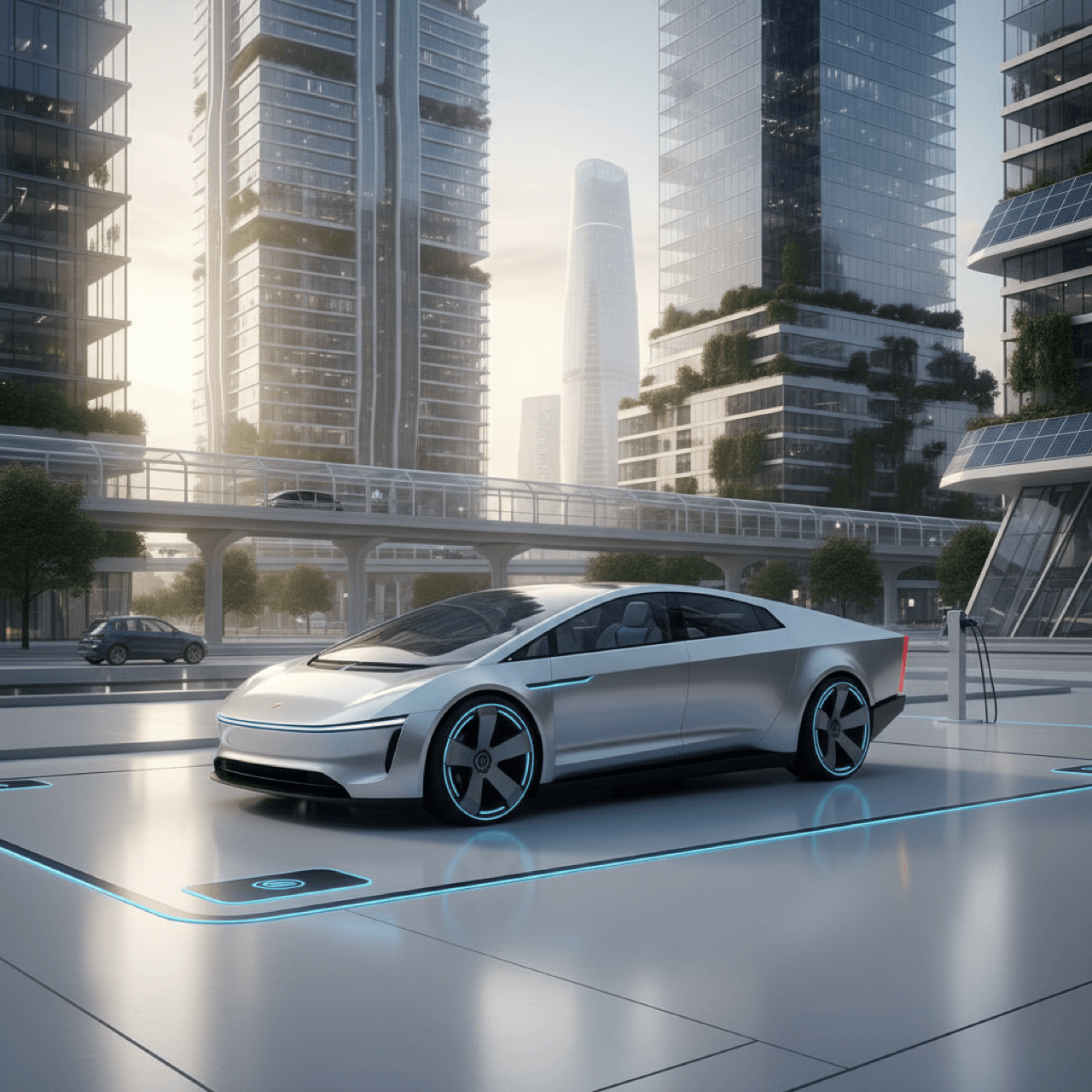
"EVs are the future." You hear that constantly. But when someone asks "is it worth it for me specifically?", the answer is never a simple yes or no.
This is not Tesla marketing or diesel fan propaganda. Just numbers, facts and real scenarios.
Quick Answer (If You're in a Hurry)
YES — an EV makes sense for you if:
- You can charge at home (private house, or parking space with power)
- 90% of your journeys are under 100 km/day
- You have a second car or can hire one for longer trips
- Your budget is 20,000 €+ (used) or 35,000 €+ (new)
NO — wait for now if:
- You live in a flat with no home charging access
- You regularly drive 300+ km in a single day
- Your budget is under 15,000 € and this is your only car
- You frequently travel to areas with poor charging infrastructure
Now — the detail.
1. The Economics: When Does an EV Pay Off?
Energy Cost Comparison
Real numbers, not brochure figures.
Assumptions:
- Electricity at home (day rate): ~0.20 €/kWh
- Electricity at home (night rate): ~0.13 €/kWh
- Public charger: ~0.40–0.50 €/kWh
- Petrol: 1.50 €/L
- Diesel: 1.45 €/L
Cost per 100 km:
| Vehicle | Consumption | Cost/100 km |
|---|---|---|
| EV (home, night rate) | 18 kWh | ~2.30 € |
| EV (home, day rate) | 18 kWh | ~3.60 € |
| EV (public charger) | 18 kWh | ~7.20–9.00 € |
| Toyota hybrid | 4.5 L | 6.75 € |
| Petrol (1.5 turbo) | 7 L | 10.50 € |
| Diesel (2.0) | 6 L | 8.70 € |
Conclusion #1: An EV is only significantly cheaper on energy if you charge at home. On public charging alone, the advantage over a diesel largely disappears.
Maintenance Cost Comparison
An EV has none of the following:
- Engine oil (no changes needed)
- Gearbox oil
- Spark plugs
- Fuel filter
- Exhaust system
Real annual maintenance costs:
| Vehicle | Servicing | Brakes* | Other | Total |
|---|---|---|---|---|
| Tesla Model 3 | 150 € | 100 € | 100 € | 350 € |
| VW Golf petrol | 450 € | 200 € | 150 € | 800 € |
| BMW 3 Series diesel | 650 € | 250 € | 200 € | 1,100 € |
*EV brakes last 2–3× longer due to regenerative braking
Conclusion #2: EV maintenance is 50–70% cheaper. Over 5 years that is a saving of 2,000–4,000 €.
Full 5-Year Comparison
Scenario: 15,000 km/year, 70% home charging.
Used Tesla Model 3 (30,000 €) vs New VW Golf 1.5 TSI (28,000 €):
| Cost | Tesla Model 3 | VW Golf 1.5 TSI |
|---|---|---|
| Purchase price | 30,000 € | 28,000 € |
| Fuel/electricity (5 years) | 3,400 € | 7,900 € |
| Maintenance (5 years) | 1,750 € | 4,000 € |
| Insurance (5 years) | 3,500 € | 2,500 € |
| Taxes (5 years) | 0 € | 500 € |
| TOTAL | 38,650 € | 42,900 € |
| Estimated resale | −20,000 € | −14,000 € |
| Net real cost | 18,650 € | 28,900 € |
Conclusion #3: Over 5 years, the Tesla costs approximately 10,000 € less. But only with regular home charging.
When Does an EV NOT Pay Off?
Scenario: Flat-dweller relying entirely on public charging
| Cost | EV (public charging only) | Petrol Golf |
|---|---|---|
| Fuel/electricity (5 years) | 6,750 € | 7,900 € |
| Time spent charging | ~200 hours/year | ~0 |
The financial saving is minimal, and the inconvenience is real. In this case, a hybrid makes far more sense.
2. Practical Life with an EV
Charging Infrastructure
Where you can charge:
| Type | Coverage | Speed | Cost |
|---|---|---|---|
| Home wallbox | Wherever you park | 7–22 kW | 0.13–0.20 €/kWh |
| Public AC (slow) | City centres, car parks | Up to 22 kW | 0.35–0.45 €/kWh |
| Public DC (fast) | Major roads | 50–150 kW | 0.45–0.55 €/kWh |
| Tesla Supercharger | Major routes, motorway stops | 150–250 kW | 0.35–0.45 €/kWh |
Reality: In most of Western and Northern Europe, the public charging network is adequate for regular use. Rural areas require more planning. If you have home charging access, the network is supplementary rather than essential.
Winter: The Biggest Concern
"What about winter?" — the most common question.
Real range figures in winter (average -5°C):
| Vehicle | Summer range | Winter range | Loss |
|---|---|---|---|
| Tesla Model 3 LR | 500 km | 350–400 km | −20–30% |
| VW ID.4 | 450 km | 320–360 km | −25–30% |
| Hyundai Ioniq 5 | 480 km | 350–380 km | −25% |
Practical winter tips:
- Pre-heat the car while still plugged in (draws from mains, not battery)
- Use seat heating instead of cabin heating where possible
- Keep battery between 20–80% state of charge
- Allow 20% extra margin for longer winter journeys
Conclusion: Winter is a challenge, but a manageable one. 350 km of real-world winter range covers 95%+ of typical daily requirements.
Long-Distance Journeys: Does It Work?
500 km journey (single charge scenario):
- Tesla Model 3 Long Range (summer): comfortable with one 15–20 minute Supercharger stop
- Tesla Model 3 Long Range (winter): one stop of 20–25 minutes recommended
1,000+ km (e.g., UK to France/Germany):
- 2–3 stops of 20–30 minutes each
- Total journey time: approximately 45–90 minutes longer than an equivalent petrol car
Conclusion: Long-distance EV travel works well across Europe's main routes. Planning required, but not burdensome.
Get a Personal Offer
We'll call you back within 24 hours.
3. What to Buy: Specific Models
New Cars (from 35,000 €)
Tesla Model 3 — 40,000–50,000 €
- Best Supercharger network coverage
- Over-the-air software updates
- Strong residual value
Hyundai Ioniq 5/6 — 45,000–55,000 €
- 800V architecture (fastest AC and DC charging)
- More spacious than Model 3
- 5-year warranty
Kia EV6 — 47,000–55,000 €
- Same 800V platform as Ioniq 5/6
- Sportier feel
- 7-year warranty
VW ID.4/ID.5 — 45,000–55,000 €
- Improved interior quality vs early versions
- Extensive dealer network
Used Cars (15,000–35,000 €)
Tesla Model 3 (2019–2021) — 25,000–35,000 €
- Check: battery SOH (above 90% is ideal)
- Standard Range+ is sufficient for most needs
Hyundai Kona Electric — 18,000–28,000 €
- Compact but 450+ km range
- Proven reliability
VW ID.3 — 22,000–32,000 €
- Post-2021 models have improved software
- Better than early reviews suggested
Nissan Leaf (40 kWh) — 12,000–18,000 €
- Cheapest entry into the EV market
- Important: check battery health carefully (no active thermal management)
What to Check When Buying a Used EV
1. Battery State of Health (SOH)
- Above 90% — excellent
- 85–90% — good
- 80–85% — negotiate on price
- Below 80% — reconsider
2. Charging history
- Heavy DC fast charging accelerates degradation
- Ideally: majority of charges done on slower AC
3. Remaining warranty
- Battery warranty: 8 years / 160,000 km (most manufacturers)
- Check whether warranty transfers to new owner (Tesla — yes)
4. Myths vs Reality
Myth: "EV batteries die after 5 years"
Reality: Tesla data shows 90%+ capacity retention after 300,000+ km. Battery warranties cover capacity dropping below 70% within 8 years/160,000 km.
Myth: "Manufacturing an EV causes more pollution than a diesel"
Reality: True at the point of manufacture. But over 30,000–50,000 km of use, an EV breaks even and becomes cleaner. In countries with significant renewable energy generation — even faster.
Myth: "You can't travel with an EV"
Reality: Across Western and Northern Europe — no problem. The public charging network on main routes is well-developed. The challenge is in more remote areas or further east.
Myth: "EV insurance is expensive"
Reality: Slightly more expensive (10–20%), but fuel and maintenance savings more than compensate.
Myth: "EVs depreciate terribly"
Reality: Tesla residual values are actually stronger than many equivalent petrol cars. Other EVs vary — longer-range, later models hold value best.
5. Who Should Buy an EV?
Ideal Candidate
- Private house or parking with charging access
- 80%+ of journeys under 150 km/day
- Access to 3-phase electricity for wallbox
- Budget from 25,000 € (used) or 40,000 € (new)
Can Work — But Think It Through
- Flat-dweller with workplace charging access
- Frequent journeys of 200–400 km (manageable with planning)
- Budget 15,000–25,000 € (older models with shorter range)
Better to Wait or Choose Hybrid
- Flat-dweller with no charging access
- Primary vehicle for frequent very long journeys
- Budget under 15,000 € and only car
- "Buy it and forget about it" mindset (EVs require minimal but real planning)
Best Alternative If EV Isn't Right Yet
Toyota RAV4 Hybrid or Toyota Corolla Hybrid — near-EV efficiency in city driving (4–5 L/100 km), but without any charging infrastructure dependence.
FAQ
How much does it cost to fully charge an EV at home?
A full charge of a 60–75 kWh battery at home costs approximately 8–15 €. That covers 350–500 km depending on conditions. Per 100 km at home — approximately 2–3 €.
Can I charge from a standard household socket?
Yes, but very slowly (approximately 10–15 km of range per hour). Fine as a backup or for PHEV with a small battery. Not practical as the primary charging method for a full BEV.
What is an EV worth after 5 years?
Tesla retains approximately 60–65% of its value after 5 years — better than most petrol equivalents. Other EVs vary: roughly 45–55%, similar to conventional cars.
Can I charge in an apartment block?
It depends on the building's management company. Some blocks have installed EV charging points. If yours doesn't, it's worth raising with the residents' association. If not possible, public charging or workplace charging becomes the primary option.
Conclusions
An EV is not for everyone — but for the right person, it is transformative:
Buy an EV if:
- Home charging access ✅
- Predominantly local/regional driving ✅
- Want to significantly reduce running costs ✅
Wait or choose hybrid if:
- No home charging access
- Very high daily mileage in all conditions
- Budget is very tight
The technology is ready. The infrastructure is improving rapidly. For the right buyer, a used EV in 2026 is one of the most rational financial decisions available.
Thinking about an EV? Contact WHEELSTREET — we'll help you find the right model and honestly assess whether EV makes sense for your situation.
You might also find useful:
- ⚡ Electric car services at WHEELSTREET — verified EVs with warranty
- 🏆 Used Tesla Model 3 buying guide — the best used EV?
- 🔋 Hybrids vs EVs — which to choose? — full comparison
- 💰 Leasing calculator — calculate your monthly EV payment
WHEELSTREET ☎ +370 660 09716 | wheelstreet.lt