Quick answer
Operational leasing is often the most tax-efficient option for Lithuanian businesses — lease payments can be deducted as expenses and VAT reclaimed where the applicable rules allow. For companies driving over 30,000 km/year, leasing usually works out cheaper than long-term rental.
A business car is an important investment. But how do you acquire it most intelligently? Buy, lease, or rent? Each option has its own advantages in terms of taxes, cash flow, and flexibility. This article provides a comprehensive comparison.
What You'll Find in This Article
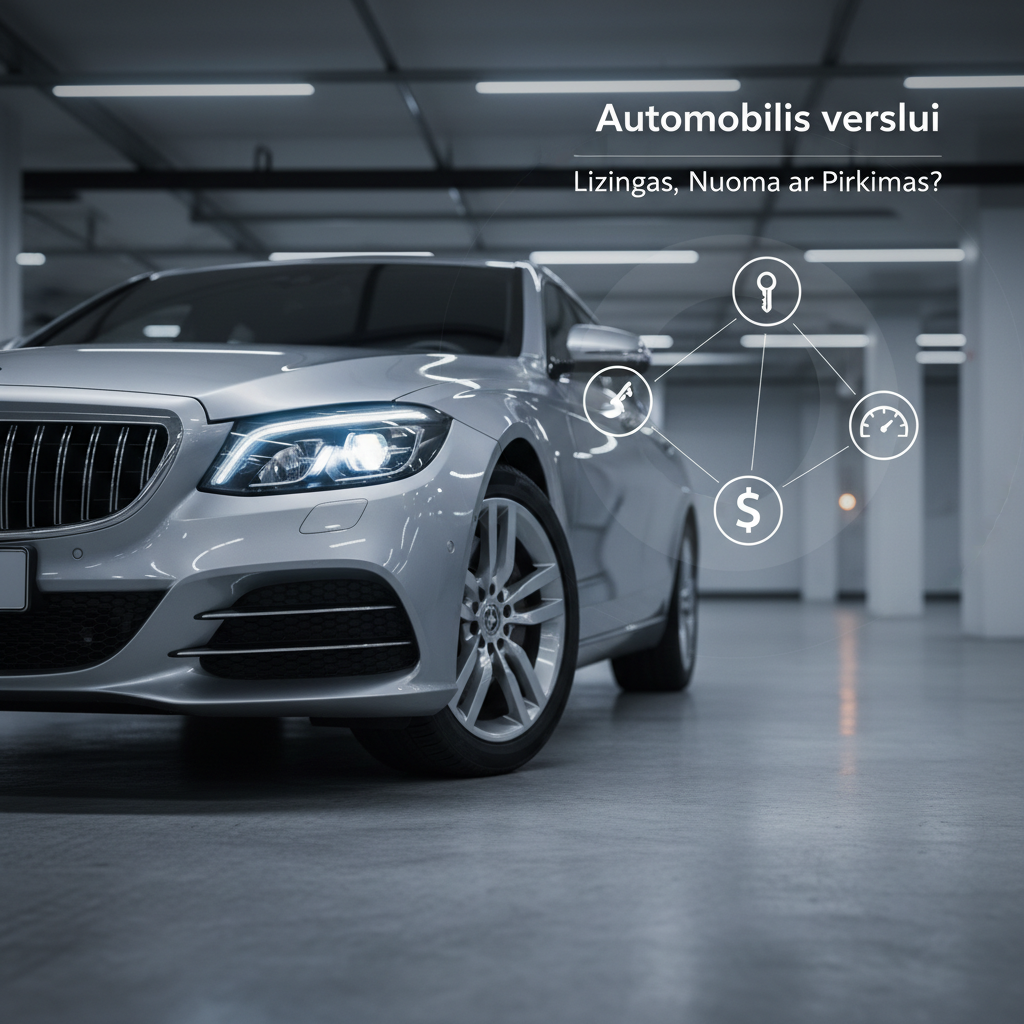 Illustration: What You'll Find in This Article
- Comparison of three options
- Tax aspects
- Financial comparison (calculations)
- Which option suits whom
- Tips for your business
Three Main Options

1. Financial Lease (Financing Lease)
What it is: A leasing company purchases the car, you pay monthly installments. At the end – you become the owner.
How it works:
- Initial deposit: 10-30%
- Contract period: 2-5 years
- Monthly payments (capital + interest)
- Residual value (sometimes)
Advantages:
- Car becomes your property
- You can deduct depreciation
- VAT is deductible (if business car)
- Clear fixed payments
Disadvantages:
- Long-term commitment
- Car "ages" on your balance sheet
- Mileage limits (or additional costs)
- Maintenance is your responsibility
2. Operating Lease (Operating Rental)
What it is: You rent a car for a longer period. The car never becomes yours – you return it at the end.
How it works:
- No initial deposit (or minimal)
- Contract period: 1-4 years
- Monthly payments (rental only)
- Return at the end
Advantages:
- Lower monthly payments
- No need to worry about resale
- Often includes servicing and tyres
- Easy to plan expenses
- Doesn't burden your balance sheet
Disadvantages:
- Nothing remains at the end
- Mileage limits (penalties for exceeding)
- Less flexibility (early termination – expensive)
- More expensive long-term than owning
3. Purchase (Own Funds or Loan)
What it is: You buy the car outright – either with your own money or with a business loan.
How it works:
- You pay the full amount upfront (or via loan)
- Car is immediately your property
- No monthly payments (except if financed via loan)
Advantages:
- No interest (if using own funds)
- Maximum flexibility
- You can sell anytime
- No mileage limits
Disadvantages:
- Large upfront expense
- Ties up working capital
- Car depreciates
- Servicing, insurance – all your responsibility
Tax Aspects
VAT Recovery
Standard car for business purposes:
- Purchase: 100% VAT recoverable (if 100% business use)
- Leasing: 100% VAT on payments
- Rental: 100% VAT on rental fees
Mixed use (business + personal):
- VAT recovery only where the law allows it (N1, resale/rental/taxi, or the EV relief)
- Or fixed method per declaration
Corporate Income Tax
Depreciation:
- Purchased car: written off over 4-6 years
- Leasing: written off over contract period
- Rental: full payment is an expense that month
What's better?
- Rental = immediate expenses (better for corporate income tax)
- Purchase = depreciation over several years
Personal Income Tax and Fringe Benefits
If an employee uses a company car for personal purposes:
Fringe benefit = 0.75% of car value per month
Example: €30,000 car = €225/month taxable benefit
Important: This applies to purchased, leased, and rented cars alike.
Get a Personal Offer
We'll call you back within 24 hours.
Financial Comparison
 Visual Model Comparison
We compare 3 options for the same car:
Car: VW Passat, €30,000 value, 3-year period, 20,000 km/year
Purchase
| Expenses | Amount |
|---|---|
| Purchase price | €30,000 |
| Servicing (3 years) | €2,400 |
| Insurance (3 years) | €3,000 |
| Resale value (after 3 years) | -€18,000 |
| Net expenses | €17,400 |
| Per month | €483 |
Financial Lease (Leasing)
| Parameters | Value |
|---|---|
| Initial deposit (20%) | €6,000 |
| Monthly payment | €520 |
| Residual value | €0 |
| Servicing (3 years) | €2,400 |
| Insurance (3 years) | €3,000 |
| Net expenses | €30,120 |
| Per month | €837 |
But you receive the car at the end (value ~€15-18k)
Operating Lease
| Parameters | Value |
|---|---|
| Initial deposit | €0 |
| Monthly payment (with servicing, no insurance) | €650 |
| Insurance (3 years) | €2,400 |
| Net expenses | €26,100 |
| Per month | €725 |
You receive nothing at the end
Comparison Summary
| Option | Total expenses | What you get at the end |
|---|---|---|
| Purchase | €17,400 | Car (~€18k) |
| Leasing | €30,120 | Car (~€15-18k) |
| Rental | €26,100 | Nothing |
Conclusion: Purchase is financially cheapest, BUT requires large upfront funds.
Which Option Suits Whom?
Purchase is right if you:
- Have spare funds (doesn't impact working capital)
- Plan to keep the car 5+ years
- Want maximum flexibility
- Drive very high mileage (rental would be too expensive)
- Small company with stable cash flow
Leasing is right if you:
- Want to own the car at the end
- Can pay an initial deposit
- Need VAT recovery
- Drive moderate mileage (15-25k km/year)
- Mid-sized company
Rental is right if you:
- Priority is cash flow management
- Don't want to worry about resale
- Want always new cars
- Important that everything is "in one" (servicing, tyres)
- Large company with a fleet
Fleet Management
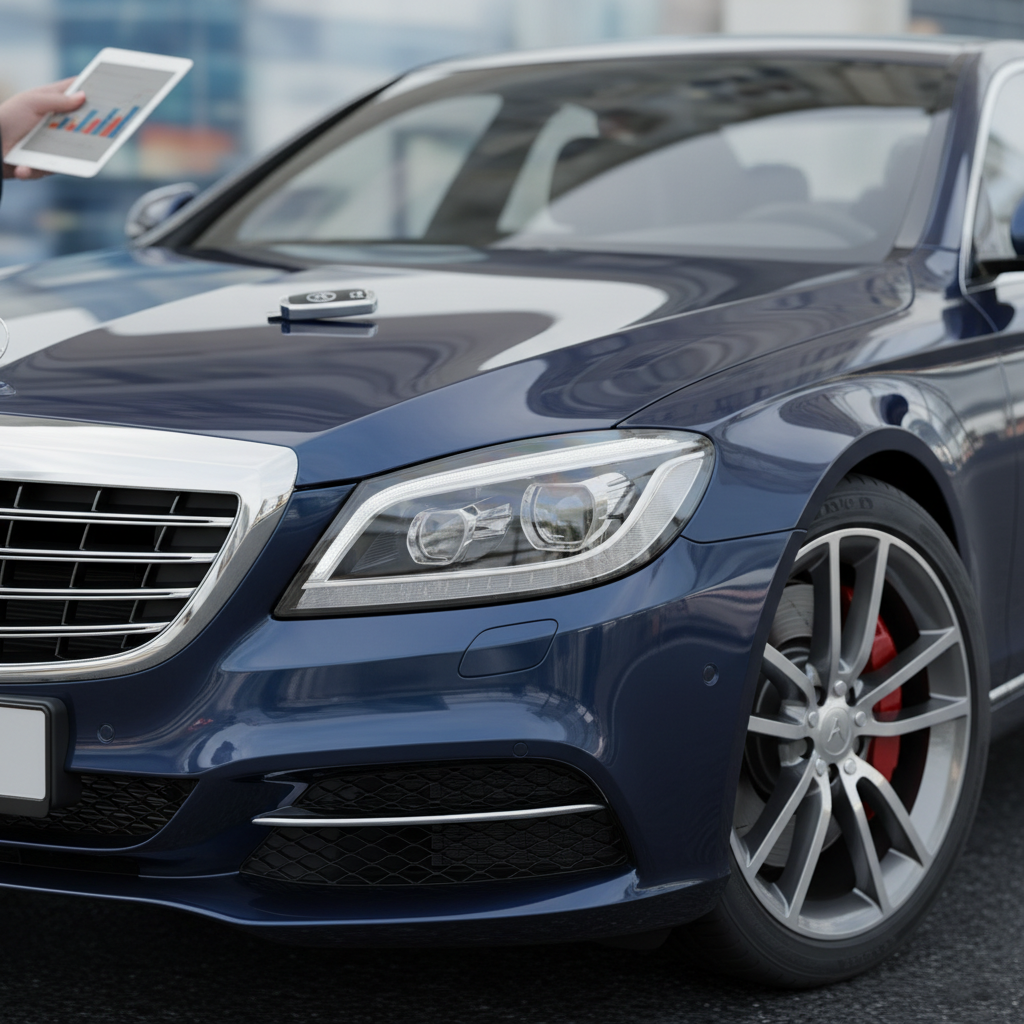 Illustration: Fleet Management
If you have several cars, rental is often more practical:
Fleet rental advantages:
- One supplier for everything
- Predictable expenses
- Easy to change cars
- Less administration
Fleet rental service providers in Lithuania:
- ALD Automotive
- Arval
- LeasePlan
- Modus Group
Electric Car for Business
Electric vehicles offer additional benefits for business:
Tax benefits:
- In some countries – higher depreciation
- Lower/no pollution tax
- Possible subsidies
Operating costs:
- 60-70% lower fuel costs
- Less maintenance
Image:
- "Green" business image
- Employee satisfaction
Drawbacks:
- Requires charging infrastructure
- Higher initial investment
Tips for Your Business
Before choosing:
-
Assess your cash flow
- Can you spend a large sum upfront?
- Is it more important to have low monthly expenses?
-
Calculate your mileage
- Less than 15k km/year: rental may be ok
- More than 25k km/year: leasing or purchase
-
Consider your timeframe
- 2-3 years: rental
- 4-6 years: leasing
- 6+ years: purchase
-
Consult with your accountant
- Tax aspects depend on your situation
- Right choice can save thousands
Negotiation tips:
- Compare at least 3 leasing/rental companies
- Negotiate the interest rate
- Check what's included in the rental price
- Ask about mileage overage charges
Frequently Asked Questions
What's better for business – leasing or rental?
Depends on your priorities. Leasing – if you want to own the car at the end. Rental – if cash flow is important and you don't want to worry about resale.
Can I recover VAT on a business car?
Yes, if the car is used for business purposes. 100% business use = 100% VAT recovery. Mixed use = partial recovery.
How much does company car rental cost?
VW Golf class – €400-500/month. VW Passat class – €550-700/month. Premium (BMW 3) – €700-900/month. Prices include servicing, exclude insurance.
Is it worth buying a used car for business?
Yes, if you have spare funds and don't want long-term commitments. Used car is cheaper, but requires more attention to maintenance.
Conclusions
There is no single "right" answer – it depends on your business situation:
| Priority | Recommended option |
|---|---|
| Lowest total expenses | Purchase |
| Cash flow management | Rental |
| Car ownership | Leasing |
| Maximum flexibility | Purchase |
| Minimal administration | Rental |
Main rule: If you have spare funds and plan long-term – buy. If cash flow matters more – rent.
Need help choosing a business car? Contact WHEELSTREET – we'll help you find the best option for your business.
Also useful:
- 🏢 WHEELSTREET financing for business – leasing for companies with VAT recovery
- 💰 Leasing calculator – calculate your business car payment
- 🔍 WHEELSTREET car sourcing – suitable business options
- 🚗 Used cars WHEELSTREET – cars for business
- 📚 Operating lease — glossary
- 📚 Leasing — glossary
Buy from Lithuania
Looking to buy a quality used car from Lithuania? WHEELSTREET offers professional car sourcing with full inspection, history check and cross-border delivery across Europe. Browse verified inventory at WHEELSTREET Used Cars or request a custom car search at Car Sourcing Service.
WHEELSTREET ☎ +370 660 09716 | wheelstreet.lt