Quick answer
Leasing interest rates in Lithuania range from 3.5-7% (2026), while consumer loans start from 5.9-12%. In WHEELSTREET experts' assessment, leasing is better for cars over €10,000 (lower rates, tax benefits for businesses), while a consumer loan is simpler for cars under €10,000 — no mandatory KASKO insurance and you own the car immediately.
Car financing in Lithuania is growing rapidly – in 2025, consumer loan applications for cars increased by 82% compared to previous years. Falling interest rates, more flexible terms, and changing consumer habits are encouraging more people to choose financing over cash purchases. But which option – leasing or a loan – is right for you?
Financing Market Situation in 2026
 Illustration: Financing Market Situation in 2026
Lithuania's car financing market is experiencing record growth. According to Citadele Bank data, during the first eight months of 2025, car loans issued increased by 77%, while leasing applications for private individuals grew by 37%. This is the fastest growth in the entire Baltic region.
Main reasons:
- Falling interest rates following ECB base rate adjustments
- Simplified loan approval process (most decisions within 1 working day)
- More flexible terms without initial deposit and mandatory comprehensive insurance
- Changed consumer habits – cars are increasingly financed rather than purchased with savings
Types of Leasing and Their Differences
Financial Leasing (Hire Purchase)
Financial leasing is a purchase on installments, where the car becomes your property after you make the final payment.
Typical 2026 conditions:
- Interest rates: from 1.45% + EURIBOR (electric vehicles) to 1.99% + EURIBOR (conventional vehicles)
- 3-month EURIBOR (end of 2025): ~2.0%
- Total annual interest rate: 3.5-4.5%
- Initial deposit: 10-15%
- Term: up to 60-84 months
- Residual value: 0-35%
- Comprehensive insurance: mandatory
Example (Toyota leasing):
- Car price: 30,000 EUR
- Initial payment: 15% (4,500 EUR)
- Term: 60 months
- Residual value: 35% (10,500 EUR)
- Annual interest rate: 3.92%
- Monthly payment: ~311 EUR
- Total amount paid: ~29,444 EUR
Operating Lease (Operational Leasing)
Operating lease is long-term car rental without the right to ownership. At the end of the contract, you return the car or exchange it for a new one.
Advantages:
- Lower monthly payments
- Ability to drive a new car every 2-4 years
- Often includes technical maintenance
Disadvantages:
- The car never becomes your property
- Mileage restrictions (typically 15,000-25,000 km per year)
- Penalties for exceeding mileage or damage
Best for: Business owners who want a representative car and change it regularly.
Consumer Loan for a Car
A consumer loan is a cash loan that you use to purchase a car. Unlike leasing, the car becomes your property immediately.
Typical 2026 conditions:
- Interest rates: from 2.7% to 35%+ (depends on credit history)
- Annual Percentage Rate (APR): from 7.4%
- Amount: up to 30,000-50,000 EUR
- Term: up to 84-96 months
- Initial deposit: not required
- Comprehensive insurance: not mandatory
Main providers and conditions:
| Provider | Interest from | APR from | Amount up to | Term |
|---|---|---|---|---|
| Fjord Bank | 2.7% | 7.4% | 50,000 EUR | 84 months |
| Finbee | 7% | 9%+ | 15,000 EUR | 60 months |
| SAVY | 8% | 10%+ | 15,000 EUR | 60 months |
| Bigbank | individually | individually | 50,000 EUR | 96 months |
Leasing vs Loan: Detailed Comparison
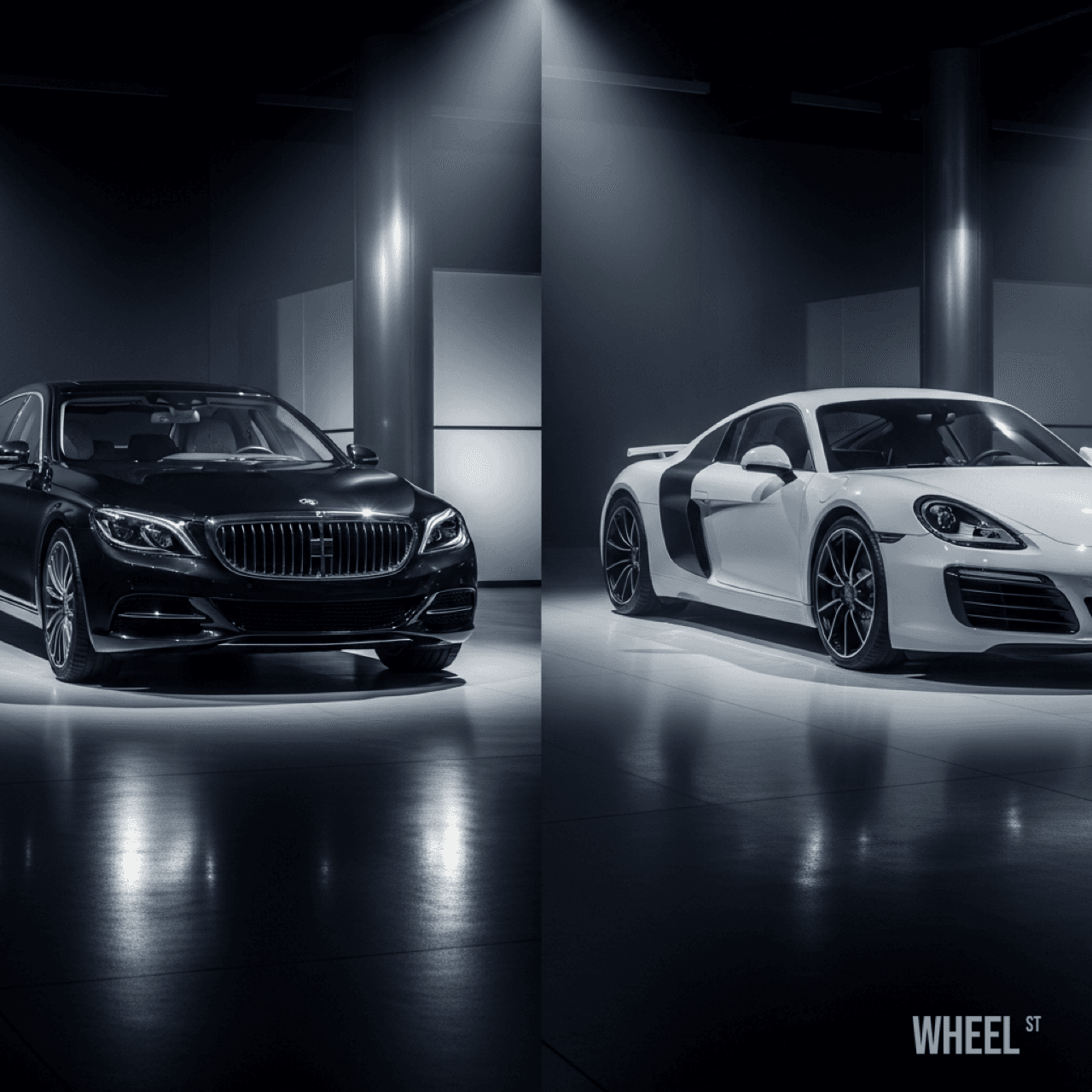
 Visual Model Comparison
Ownership Rights
Leasing: The car belongs to the leasing company until the final payment is made. You cannot sell or transfer it without the leasing company's consent.
Loan: The car becomes your property immediately. You can sell it at any time (although the loan agreement may contain certain restrictions).
Initial Deposit
Leasing: Typically requires an initial deposit of 10-15%.
Loan: Most lenders offer loans without an initial deposit.
Insurance
Leasing: Comprehensive insurance is always mandatory. This significantly increases monthly expenses – especially for more expensive vehicles.
Loan: Comprehensive insurance is not mandatory. You can decide for yourself whether to insure the car fully.
Vehicle Age and Value
Leasing: Suitable for newer vehicles (up to 15 years old by the end of the lease term). Minimum price – from 10,000 EUR.
Loan: You can finance any age vehicle, including older and cheaper ones.
Choice of Vehicle
Leasing: Limited choice – you can only choose from partners' list or specified vehicle types.
Loan: Complete freedom of choice – you can buy from any seller, including private individuals.
Get a Personal Offer
We'll call you back within 24 hours.
Financial Comparison: Concrete Example
Suppose you want to acquire a 5-year-old Volkswagen Tiguan for 25,000 EUR.
Leasing option:
- Initial deposit: 2,500 EUR (10%)
- Amount financed: 22,500 EUR
- Term: 60 months
- Interest rate: 4.5% annual
- Monthly payment: ~420 EUR
- Comprehensive insurance: ~60-80 EUR/month
- Total monthly expense: ~480-500 EUR
- Total amount over 5 years: ~31,400 EUR
Loan option:
- Initial deposit: 0 EUR
- Loan amount: 25,000 EUR
- Term: 60 months
- APR: 9%
- Monthly payment: ~519 EUR
- Comprehensive insurance: not mandatory (assume not insured)
- Total monthly expense: ~519 EUR
- Total amount over 5 years: ~31,140 EUR
In this example, total costs are similar, but with a loan you have more freedom and are the car owner immediately.
When to Choose Leasing?
 Illustration: When to Choose Leasing?
Leasing is better suited when:
-
You're buying a new or nearly new car – leasing interest rates for new vehicles are often lower than loan rates.
-
Vehicle value exceeds 15,000-20,000 EUR – larger sums are financed by leasing on more favorable terms.
-
You're a business owner or company – you can deduct VAT, write off expenses, and receive tax benefits.
-
You want lower monthly payments – due to residual value, leasing payments can be 20-30% lower.
-
You plan to change cars every 3-5 years – leasing makes it easy to transition to a new model.
When to Choose a Loan?
A loan is better suited when:
-
You're buying a used car from a private individual – you cannot do this with leasing.
-
Vehicle value is less than 10,000 EUR – leasing companies rarely finance cheaper vehicles.
-
You don't want to pay for comprehensive insurance – with a loan, that's your decision.
-
You want to own it immediately – you can sell, trade, or do whatever you want with the car.
-
You have a good credit history – you'll get competitive interest rates close to leasing conditions.
2026 Tax Changes for Businesses
From January 1, 2025, important corporate income tax changes came into effect that directly affect company car financing:
Car acquisition price limits by CO2 emissions:
- 0 g/km (electric vehicles): 50,000 EUR
- up to 50 g/km: 40,000 EUR
- 51-130 g/km: 30,000 EUR
- 131-200 g/km: 20,000 EUR
- over 200 g/km: 10,000 EUR
This means that when purchasing a more expensive, polluting vehicle, a company can only write off part of its value.
Leasing interest rates for environmentally friendly vehicles:
- Electric vehicles: from 1.45% + EURIBOR
- Hybrids (up to 50 g/km): from 1.49% + EURIBOR
- Hybrids (51-130 g/km): from 1.79% + EURIBOR
Most Common Mistakes When Choosing Financing
1. Not Evaluating All Costs
When comparing leasing and loans, you must include comprehensive insurance costs, administration fees, and other additional expenses.
2. Choosing Too Long a Term
Longer term = lower payment, but higher total amount. Also, the car may depreciate faster than you pay it off.
3. Ignoring EURIBOR Risk
Leasing interest rates are usually tied to EURIBOR, which can change. If EURIBOR rises 1-2%, your payment could increase by 20-30 EUR/month.
4. Not Calculating Residual Value
If you choose a high residual value, monthly payments will be lower, but at the end you'll have to pay a large sum or refinance.
5. Not Checking Credit History
Before applying, check your credit history through Creditinfo. This will tell you what conditions to expect.
Practical Tips Before Signing
-
Compare at least 3-5 offers – online calculators allow you to do this in minutes.
-
Pay attention to APR – this is the true cost of the loan, including all fees.
-
Ask about early repayment conditions – some lenders charge penalties.
-
Realistically assess your financial situation – the monthly payment should not exceed 20-25% of your income.
-
Don't forget additional costs – insurance, vehicle inspection, repairs, fuel.
Conclusions
Both leasing and loans have their advantages. Leasing is better suited for more expensive, newer vehicles and business needs. A loan provides more freedom and is suitable for used cars and purchases from private individuals.
Most importantly – assess your situation, compare offers, and don't overextend yourself with monthly payments. A car is not an investment, but a constantly depreciating asset.
Planning to buy a car? WHEELSTREET helps you find the best option – we advise on financing, check vehicle history, and handle all documents. Contact us and save time and money.
Also Useful:
- 💰 Leasing Calculator – calculate monthly payment in real time
- 🏆 Leasing vs Purchase – which is better? – complete comparison
- 🔍 WHEELSTREET Financing – financing from 0% initial deposit
- 🚗 Used Cars WHEELSTREET – vehicles with financing options
- 📚 Leasing – Dictionary
- 📚 EURIBOR Interest Rates – Dictionary
Buy from Lithuania
Looking to buy a quality used car from Lithuania? WHEELSTREET offers professional car sourcing with full inspection, history check and cross-border delivery across Europe. Browse verified inventory at WHEELSTREET Used Cars or request a custom car search at Car Sourcing Service.
WHEELSTREET ☎ +370 660 09716 | wheelstreet.lt